Faceless mythology channel ideas, sources, and art rights
Myths survive in versions, so name the text you are telling, keep ancient, later, and modern versions apart, and animate a visual world of your own instead of running a slideshow.
By NoFaceTube Editorial Published 7 min read Not yet reviewed by the editor
- Policy risk
- Low
- Production bar
- Very high
- Formats
-
- Illustrated retelling with sources
- One myth across its versions
- Myth-to-artifact documentary
- Comparative motif explainer
- One-myth Shorts
- Platforms
- YouTube YouTube Shorts TikTok
On this page
Much of mythology’s raw material is old enough to work with freely: older translations of the texts, and the vases, reliefs, and paintings that show the stories. The filler version uses none of it. It runs on generated gods with identical muscles and the same dozen Greek myths retold from the same summary.
What high quality looks like in mythology
A myth is not one fixed story. It survives in versions, written down by different people in different centuries, often long after the story first circulated. A strong mythology video makes that the point instead of hiding it.
- Named sources: say which text you are telling, who wrote it, and roughly when. If the well-known version comes from a later poet, say so.
- Ancient, later, and modern kept apart: separate the earliest sources, later retellings, and modern inventions from films, games, and novels.
- Culture-specific visuals: dress, architecture, and the symbols that identify each figure should come from the culture and period, not from a generic fantasy look.
- Care with living traditions: some figures that mythology channels cover are worshipped today. Treat those traditions with the accuracy and respect a good scholar would, and use sources from within the tradition as well as about it.
- Storytelling craft: a myth is a story first. Structure, pacing, and voice are the product.
Formats that hold up
These formats reward time spent with the texts and with original artwork. The faceless video styles guide covers illustrated storytelling and 2D and 3D animation, the styles this niche depends on.
- Illustrated retelling with sources: one myth, told well, with the source text named on screen.
- One myth across its versions: the same story from its earliest source and later retellings, with what changed and why.
- Myth-to-artifact documentary: a myth told through the vase, relief, or manuscript that preserves it.
- Comparative motif explainer: one motif, such as a flood or a journey to the underworld, across cultures. Separate documented contact from coincidence.
- One-myth Shorts: a single scene from a named source, drawn in the channel’s own image system. TikTok’s Creator Rewards program needs videos of about a minute or more (its support page says “at least” one minute, its launch post “over” a minute) (TikTok), which suits a single complete episode of a myth better than a fragment stretched to length.
The production bar
Research and sourcing
Read the primary text in at least two translations, plus a scholarly commentary or reference work. Note where translations differ, because those passages often deserve time on screen. Keep a source log that ties each scene to a text and a passage.
Script
Tell the story with real structure, then step outside it where the versions diverge. Quote the source briefly and attribute it in the narration. Mark your own interpretation. Because the plot itself is centuries old, the original angle comes from your choice of version, artifact, or lens.
Voice
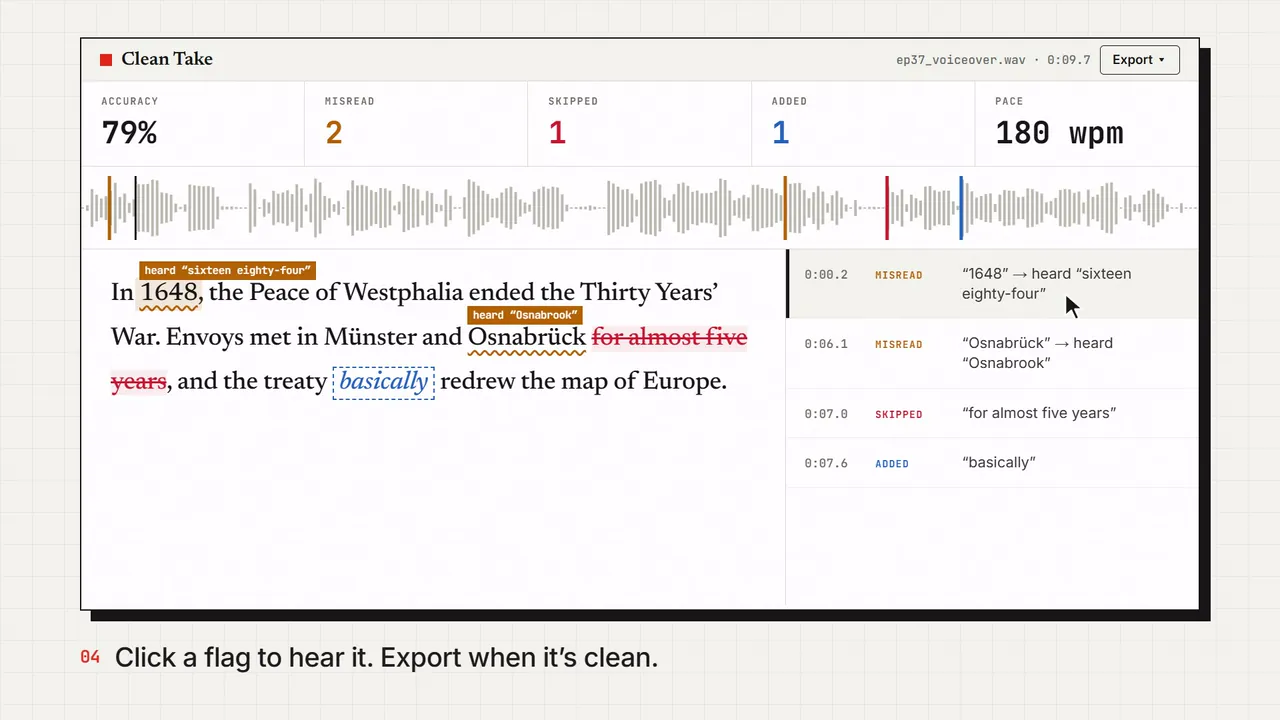
The AI voiceover guide suggests storyteller warmth with a wide dynamic range, and warns against a single flat register. Settle how every name is said before recording. Decide between the original-language form and the familiar English form, and keep the choice consistent. Borrowing a famous narrator’s voice through cloning is never acceptable.
Visuals
Commission or create illustration with a written style guide: palette, line, costume references, and the identifying symbols for each figure. Show public-domain artworks with credits, and say when a painting is centuries younger than the myth it shows. If you use generated imagery, give it a defined style and human art direction, and never present it as ancient art.
Sound
Avoid the same “epic” choir under every culture’s stories. Music should suit the material without turning a culture into a costume. Let important lines land in near silence.
Sourcing visuals legally
Old paintings and ancient objects are the natural visuals for mythology, and many images of them can be used freely. The image file still has terms. The notes below are a starting point for clearing artwork, not legal advice.
- Museum collections: download from the holding institution’s own page for the object and read the rights statement there. Use only images marked public domain or released for reuse, and keep the object page URL in your rights log.
- Wikimedia Commons: a painting can be public domain in one country and not another, and Commons tags reflect that (Commons reuse guide). Check the tag on the file page before you use it.
- Library of Congress prints and illustrations: as a rule the Library does not hold the rights to these prints, so it cannot give you permission; read the advisory attached to the print you want (rights information).
- Share-alike illustration: if you animate or recolor a CC BY-SA image, the license requires credit, a license link, a note that you changed it, and a compatible license on what you share.
- CC0 images: a CC0 file frees you from the uploader’s copyright only. The CC0 legal code says the uploader takes no responsibility for rights other people may hold in the work.
- Translations and adaptations: treat modern translations as someone else’s work: quote briefly and credit, or use translations old enough to be out of copyright. Do not borrow a film’s or game’s design for a god. Draw from the ancient sources and artifacts instead.
Log each artwork with its museum or archive, object number, rights statement, credit line, and check date.
Slop tells to avoid
- Generated gods with the same muscular build, glowing eyes, and lightning in every shot.
- Greek and Roman names swapped mid-story, such as Zeus in one line and Jupiter in the next, with no explanation.
- A film or comic version told as if it were the ancient myth.
- “Lost myths” that appear in no source.
- One version told as the only version, with no source named.
- A figure drawn with another god’s symbols, or in the wrong culture’s dress.
- Renaissance canvases panned across one by one while a monotone voice summarizes the plot.
- “Top 10 most powerful gods” rankings with no basis in any text.
- A goddess whose name changes stress from one retelling to the next.
Policy and advertiser-suitability risks
Mythology rates low on policy risk, because few of its subjects touch YouTube’s sensitive categories directly. The risks are templated production, violent or sexual source material, and photoreal generated imagery. The rules below reflect YouTube’s and TikTok’s help pages as of 5 October 2026.
Slideshows and templates. Of all the shortcuts in this niche, the still-image slideshow is the one YouTube names: image slideshows are on its list of generic or repetitive content that cannot be monetized (monetization policies). TikTok’s Creator Rewards rules likewise treat single or multiple photos as unoriginal (TikTok). Animate the work, and vary substance from episode to episode. The inauthentic content entry has the history.
Using AI to visualize stories. YouTube’s own examples of what can still be monetized include “using AI to visualize a unique character and narrative you invented” (monetization policies). Retelling an existing myth is not the same as inventing one, so the safe reading is narrower: AI-assisted visuals are not the problem, interchangeable output is.
Violence and sex in the sources. Myths are full of both. The advertiser-friendly guidelines apply to your video and thumbnail whatever the age of the story. Depict these scenes the way a museum label would: clearly, without lingering, and never as thumbnail bait.
Disclosure. YouTube does not require its altered or synthetic content label for clearly unrealistic content, and its own example is someone riding a unicorn through a fantastical world (YouTube Help, YouTube Blog). Photorealistic “footage” of a creature presented as real is different. TikTok requires a label on AI-generated content with realistic images (TikTok Support). For a god rendered in a painterly style versus one rendered as if filmed, the AI disclosure guide walks through where the line falls.
Living faiths. Mocking figures that people worship today is an editorial failure before it is a policy question. Explain belief accurately, and separate what a tradition holds from what outsiders have written about it.
Channel ideas worth making
- One myth, three sources: tell the same story from its earliest text and two later versions. The differences show how stories change hands.
- The artifact that kept the story: build the video around one vase, relief, or manuscript. The object is evidence a summary cannot offer.
- Before the famous version: show what a story looked like before the retelling everyone knows.
- How the god was drawn: trace how depictions of one figure changed across centuries of art, with the artworks themselves as the evidence.
- The motif’s journey: follow one motif between cultures, and separate documented contact from coincidence on screen.
- The minor figure’s view: retell a famous myth from a character the sources barely mention, and mark every point where you go beyond the text.
- The myth and the place: tie a myth to the real terrain it names, drawn on original maps.
Sources
- 1YouTube channel monetization policiesYouTube Help
- 2TikTok Creator Rewards ProgramTikTok Creator Academy
- 3Disclosing use of GenAI contentYouTube Help
- 4How we’re helping creators disclose altered or synthetic contentYouTube Official Blog · 2024-03-18
- 5About AI-generated contentTikTok Support
- 6Advertiser-friendly content guidelinesYouTube Help
- 7Copyright and Rights and Restrictions InformationLibrary of Congress
- 8Commons: Reusing content outside WikimediaWikimedia Commons
- 9Attribution-ShareAlike 4.0 International (CC BY-SA 4.0)Creative Commons
- 10CC0 1.0 Universal legal codeCreative Commons
Spotted an error or a dead source link? Send a correction.